Renton honored for WA’s largest infiltration stormwater facility
Published 5:30 am Sunday, April 26, 2026
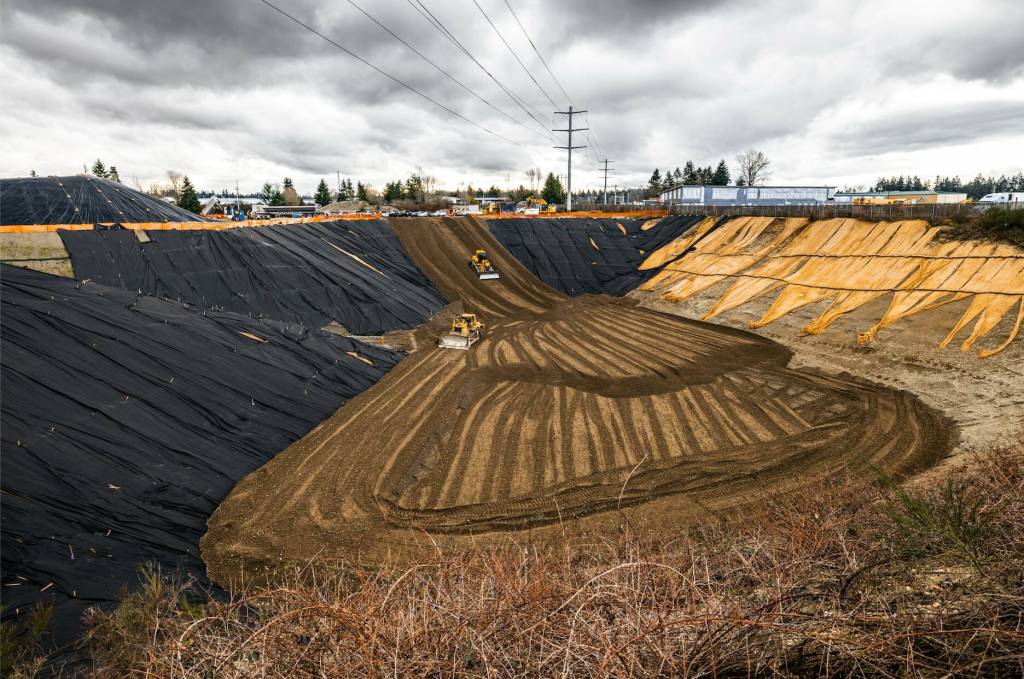
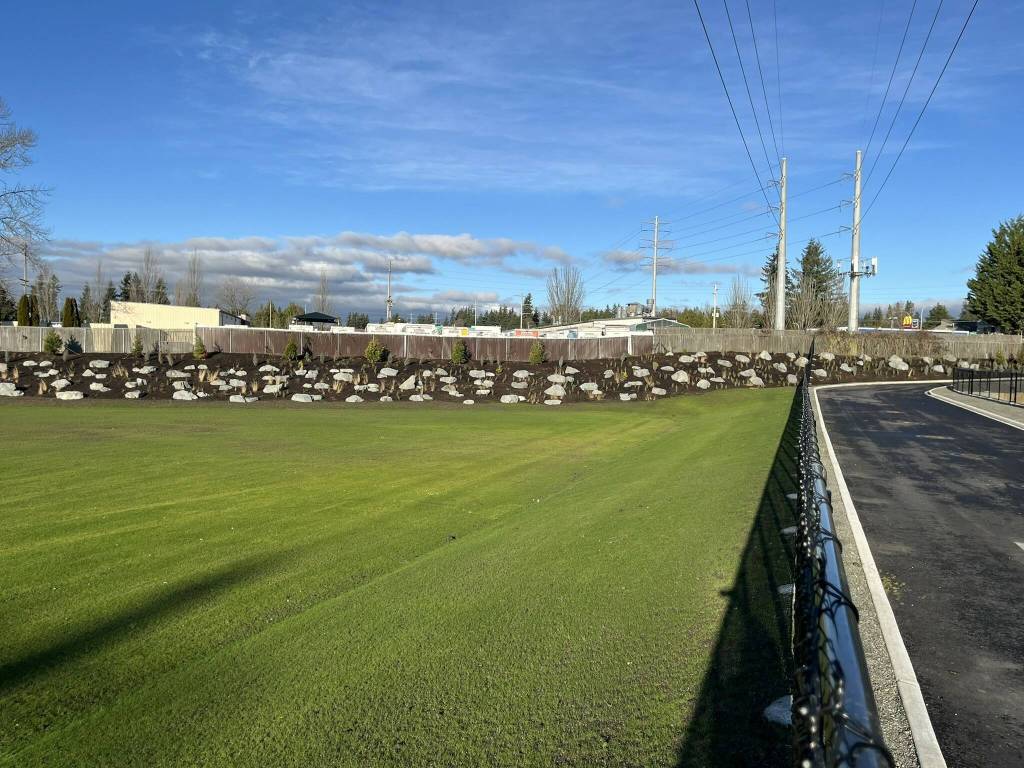
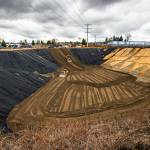
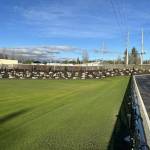
The city of Renton has won a Gold Award for the Monroe Avenue Stormwater Facility completion, the largest stormwater infiltration facility in Washington.
Renton and the contractor for the project, Otak Inc., received the Gold Award for Uniqueness and/or Innovative Application of New or Existing Techniques from the American Council of Engineering Companies of Washington (ACEC-WA) in February for the project in the Renton Highlands.
Surface water engineering manager Joe Farah said this area of the city had no drainage connection to a creek, a river, or a lake, and relied on a few infiltration pipes until the 1990s. At that time, Renton got a temporary drainage easement to discharge stormwater from this area to a gravel pit at 301 Monroe Avenue NE.
“The Monroe Avenue Infiltration Facility project resolved a decades-old problem for Renton and provided an engineered drainage outlet for 260 acres of land in the Renton Highlands,” Farah said. “The project was needed because the temporary solution that worked for three decades reached a point where it was no longer workable.”
First, Renton needed to secure land rights for a permanent stormwater drainage facility.
“If Renton lost its temporary drainage easement, and we had no land rights to build a stormwater facility on the gravel pit site, we would’ve had to construct a large stormwater pipe that would travel miles across the city from Renton Technical College down to the Cedar River,” Farah said. “This scenario would have been extremely costly and disruptive to traffic on a major route.”
The facility is designed to preserve the infiltration capacity of the native soils for up to 100 years with its most innovative element, a multi-layered sediment and pollutant removal “treatment train.” Water moves through the system and then soaks into the ground, free of debris and pollutants, to recharge groundwater aquifers and feed the Cedar River.
“The facility is designed to handle the 1% annual chance event (the 100-year storm) and can store the 0.2% annual chance event (the 500-year event) within the space above the infiltration facility,” Farah said.
The project won the award for being a multi-benefit project. The facility reduces flood risk along Monroe Avenue Northeast, which serves critical facilities like the Renton Public Works Maintenance Shops and the King County Office of Emergency Management. The facility also protects the Cedar River aquifer, Renton’s drinking water supply, from polluted stormwater.
The infiltration and treatment facilities utilizes 2.2 acres of underground infiltration chambers situated on a 14-acre site, the largest in Washington to use the infiltration system. Other larger facilities, like the Point Defiance Regional Stormwater Treatment Facility, release their treated water directly into a larger body of water.
“We used approximately 120,000 tons of rock to fill the space needed to create the infiltration facility. That’s equivalent to 28 Olympic swimming pools and over 6,600 fully-loaded dump trucks,” Farah said.
The surface of the facility was designed as a community asset with an open green space suitable for neighborhood gatherings and recreation. The site was privately owned by Segale Properties, who plans to develop the surrounding land.
Perimeter fencing and planted berms keep people enjoying the area safe. Farah said the facility is designed to preserve the long-term infiltration capacity of the ground underneath by providing maintenance access to the components and treatment stations.
“A major concern with infiltration facilities is that over time the soil gets plugged with silt, like a Brita filter at home gets clogged up and requires replacement, and that concern was nearly eliminated,” Farah said.
Farah said constructing a permanent infiltration facility on the gravel pit was the most feasible, cost-effective, environmentally friendly, and least impactful option available. Renton was able to secure $10.9 million of grant funds from the Department of Ecology, which funded 55% of the total project cost. The project was completed ahead of schedule and under budget in January, 2026.