Time to stop blaming the cat for gardening probems | LIFE IN THE CITY
Published 3:56 pm Friday, March 7, 2014
“Duncan! Get out of that bed!” I ranted, waving my arms around like a lunatic octopus as I charged through my backyard gate.
“DUNCAN!”
Of course, my nemesis, Duncan our family’s ginger-colored cat, hadn’t moved a muscle. He just went along with his business, his amber eyes staring back at me with that “don’t bother me I’m in the zone” look cats give when they are otherwise engaged.
“Unbelievable!” I shouted. “You kids get your cat out of my garden bed!”
With five kids you might think I had finally gone berserk. But the ironic thing is that it’s our animals that often drive me toward the knife’s edge.
Between Duncan using these garden beds as his personal litter box and our free-range bunny, my garden beds had produced a very anemic bounty.
I think I’m a lot like other people when it comes to gardening: I see beautiful gardens producing tons of organic food alongside flowers and trees that work together to support attracting birds and bees in a harmonious, non-toxic relationship, but I don’t know how to get there! I don’t have the experience.
I’m being dramatic about Duncan because, really, I feel guilty about my inability to fully commit to what I’m passionate about: community gardens, organic vegetables, composting, and connecting with others in my community who share my passions.
There’s always an excuse. And Duncan’s an easy target.
“Frickin’ cat.” I muttered, biting down the expletive like a horse clamping a silver bit, as I used a shovel to uncover the once beautiful Cedar Grove soil now laden with Duncan lumps.
So with spring around the corner I was determined to get my garden and yard into shape and shine some light on Sustainable Renton whose mission it is to foster a healthier community and planet. The focus of their efforts is on issues around food: community gardens, community farm, food co-op, eating local foods, foraging, etc.
 In early April 2013 Sustainable Renton volunteers broke ground for Renton’s first Community Farm on land located behind Celebration Foursquare Church in northeast Renton. Plots were made available to community members for use. The size of each plot is 20 feet by 10 feet and they cost $50 for the season.
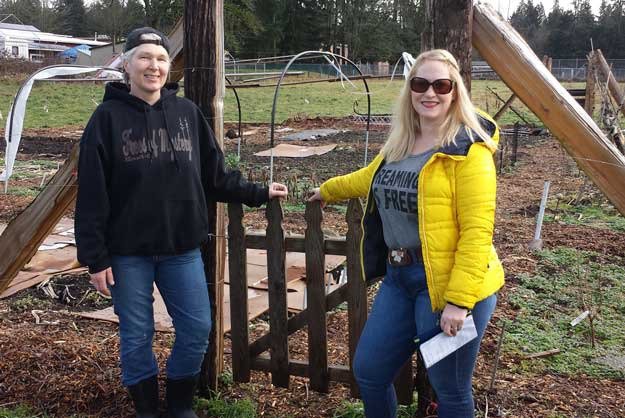
Sustainable Renton is a registered 501(c)(3) non-profit organization formed by a handful of determined Renton residents. I had the absolute delight meeting Lara Reynolds, farm manager, and a founding member responsible for the inception and execution of Sustainable Renton’s Community Farm.
Driving onto the Celebration Church property in the Renton Highlands the other day, I was anxious to meet Lara and take a tour of the Community Farm located on a portion of the church’s five acre parcel.
The church is unable to develop the land because of wetlands and generously offered to host the Sustainable Renton Community Farm, gratis and with no strings. There are no religious affiliations with the project.
Though it’s still winter I pulled up and parked, easily spying the sturdy bones of the place: Split cedar logs surround the beds in a free-flowing fence. You can hear children playing in the distance at the Apollo Elementary School. The property next door is a horse ranch.
As someone who has longed for a Community Farm and Co-op in Renton where people could come and buy organic vegetables, take cooking classes and hang around with the kids at a gathering place for people who value such things what Sustainable Renton has accomplished so far is a welcome sight for sore eyes.
Lara pulled up wearing jeans, mud boots, a baseball cap on backwards and greeted me with a pleasant smile.
The large fire pit is soggy, but come summertime there will be a roaring fire for marshmallow roasts.
“We want to create a space here where families can come for free and enjoy being here,” Lara said.
There is a play structure for kids and in the children’s garden my imagination went wild at bamboo poles tied together into the shape of a teepee that served as a natural place for peas to grow and climb.
We passed composting troughs and a shed made of wood pallets topped with a roof made from an old, plastic 7-11 sign.
Rows of beds were covered with flat cardboard and donated burlap sacks to protect the soil from rain drops that pound the oxygen out of the soil.
Looking around the property I could appreciate the kind of volunteer hours and passion it has taken to bring to life an endeavor of this magnitude. Everything there has been donated or acquired at low cost. Lara and her husband have logged many hours of sweat equity along with many others willing to donate supplies and expertise. An on-site Port-a-Potty was even purchased through a donation. Cedar Grove Compost donated compost and Napoleon Equestrian Ltd. has given an unlimited supply of composted horse manure.
Currently there are 28 plots that are occupied, (two are dedicated to REACH Ecunemical Society for cooking and serving veggies to help feed the hungry folks of Renton every night at 5 p.m. and two beds provide produce for The Red House).
Next month, 14 more plots will be available and currently Sustainable Renton is talking with Seattle Tilth about getting help with CSA certification which essentially means a community supported agriculture, a co-op where everyone has a share.
This year I have vowed to get my garden beds in order and follow through on a commitment I made to myself three years ago when I offered to host three garden beds that the Seattle Tilth’s Just Garden Project program built in my yard to teach my kids how to grow organic food and to donate a large portion of it to the food bank.
With the help of Sustainable Renton I plan to make good on that promise.
You can follow my progress at www.pippimamma.com.
For more information about Sustainable Renton visit: http://sustainablerenton.wordpress.com/