Clergy, teens and police come together to build trust at Teen Summit
Published 4:03 pm Wednesday, June 24, 2015
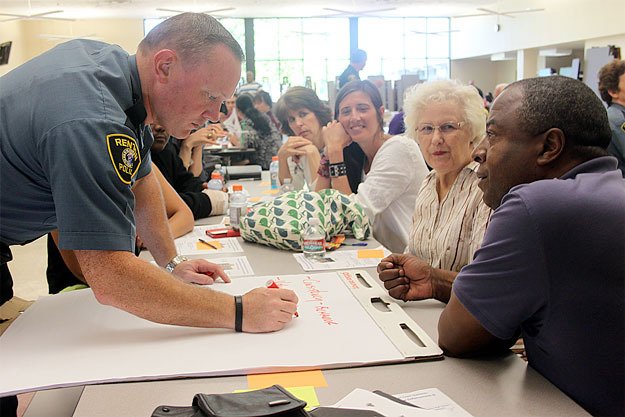
This past weekend’s Teen Summit to discuss relations between the African-American community and police officers may have begun with a prayer to make us “one Renton” and ended with everyone taking a deep breath, but in between there were open, frank discussions and honest pleas for understanding from both sides.
Hosted by the City of Renton and a group of African-American clergy members, the summit sought ways to bridge gaps and improve relationships between minority teens and the police force following several high-profile incidents around the country such as in Ferguson, Mo., or Baltimore.
“This is the beginning of many opportunities when we will come together as a community,” said Dr. Linda Smith, pastor of the SKY Urban Empowerment Center and director of the REACH Center of Hope. “This is not just a black issue; this is a community issue.”
Approximately 85 people of all races and ages attended the summit, held at Renton High School, including pastors, teens, city officials, police officers and members of the community.
Police Chief Kevin Milosevich opened the proceedings talking about the “disconnect” that has developed between law enforcement and some members of the community, particularly young people, calling it a “crisis of law enforcement.”
Milosevich said that Renton’s diversity continues to increase and though there have been no real problems in Renton, he said he has had discussions over the past several months and knows that public, especially young people, has lost some trust in law enforcement.
“Without public trust, we can’t do our job,” he said. “It only takes a few incidents to create a huge issue.”
Milosevich also said the hope to explain some police procedures and teach teens what to do when contacted by a police officer, explaining that the most important thing from an officer’s perspective is a subject’s hands and what he or she is doing with them.
 But the chief also said that meetings like the teen summit gave him a new perspective, including an “A-ha moment” that came when he learned that while all parents want the best for their children’s future, but that the main hope from the African American pastors and parents with whom he has spoken is simply to see their kids “survive.”
Smith also said the goal of many was to have officers see African Americans – and males in particular – “as human beings.”
“Not every African American male you see is a criminal,” she said.
As the room broke into groups for a more detailed discussion about steps to increase cooperation and build trust between young adults and law enforcement, the same topics were echoed again and again.
At each table, a police officer and a pastor facilitated the discussion with citizens and many of the teens recounted stories and shared their honest perceptions of police.
At one table, a young black man talked about walking in Tukwila when police contacted him about a fight elsewhere in the community.
“The way they encountered us already made us feel like criminals,” he said, adding that he did not feel innocent until proven guilty, though he did admit that he has not had similar problems in Renton, though the incident affects his perception of police.
At another table, a pastor’s son said the first thing he feels when seeing a police officer is “alarmed,” even when he knows he is not doing anything wrong.
“One wrong move I make will decide whether I get home safely,” he said.
The view came as surprise to a white parent at the table, who said he knows his son does not view police in the same way.
“I have really different experiences,” said a young white girl, who said she recently moved to Renton from a smaller town where she knew all the police officers by name.
Another white woman said always sees police officers as “keeping the peace,” though another African-American woman at the table disagreed
“That uniform is very intimidating,” she said.
At many tables, community members also used the opportunity to question the officers at the their table about their perceptions. One officer explained that police often react based on the energy and attitude of the person they are talking to and if that person is agitated or angry, the police feed off that.
Following the group discussions, the group reconvened as a whole as Smith and Milosevich took turns answering questions that came from the individual tables.
One teen girl asked about why multiple officers respond to stops, saying that seeing that many police officers surround a car causes a fear response for those in the car in the same way furtive actions may cause one in the officers.
Officers explained that it is not unusual for additional units to arrive at a scene for officer safety, though the “vast majority” of police contacts are one-on-one, though it seemed the answer did little to satisfy the teen’s concerns.
Another question asked about the diversity of the police force reflecting that of the community and Milosevich admitted it did not. Currently, the City is about 49 percent white – one of two majority minority cities in the county – while the police force is closer to 80 percent white.
Milosevich said that is partially a reflection of the times people were hired, adding that Renton’s diversity has “blown up” in the past 10 years as the city grew, though many officers were hired prior to that.
He also said they have made “strides” in the past couple of years, this year hiring two female and two black officers, but said the competition for minority officers is very high and only about 5 percent of the current applicant pool applying for multiple jurisdictions is black.
“It’s a math issue,” he said.
He also said the police department is the most diverse department in the city.
After the questions, the group reviewed the top issues from each table and nearly every smaller group came to the same conclusion: what is needed is more positive interaction between the community and the police department, including personal engagement when there is not a problem and interactions when the officer is not on a call.
Individual groups also stressed respect in both directions, from police treating individuals with respect during interactions and teens learning to respect the authority of officers so as not to create a situation when there is not one.
“Perception is reality,” said Pastor Mike Thomas, calling for a “a mutual appreciation that threats begat threats.”
As time ran down, Thomas, who opened the meeting with a prayer, called for everyone to take “a deep breath.”
Following the discussion, Milosevich said it was nice to see a large turnout and that he felt it was good conversation that needed to be had.
“We all want the same thing,” he said.
But not everyone felt the summit was as useful as hoped.
Christopher Robinson, 22, said he has seen some minor issues, but it did seem the Renton Police hoped to build on positive interactions. However, he said he felt as though without really addressing the past it would be tough to have a “fresh start” between the police and the community.
A group of teens outside following the meeting also said it went well and they hope the police will view them in a better light, but added they hope the city’s take-away is that teens are not adults and therefore the contact with them needs to be different because they don’t always understand the situation in the same way adults do.
Kimberly Thomas, who brought her children to the meeting said she wanted her children to see the police in a different light and to learn some procedural information, that two police cars at a scene is normal, for instance.
She called the meeting “eye-opening” and said it was worth the time and an opportunity to build trust, echoing one of the common themes Smith reiterated throughout the event.
“When we work together united as one,” Smith said, “we can do great things in our community.”