Services available to veterans through number of programs | A Renton Reporter special report
Published 6:34 pm Friday, August 12, 2011
When they come home from active duty, often on a battlefield, American veterans will find services available to them to help re-enter civilian life and help meet their medical needs.
Part of providing those services is making sure that veterans know they are available.
Veterans services are provided by county, state and federal agencies, most notably the U.S. Department of Veterans Affairs, the VA. It’s opening a new office in the Compass Veterans Center soon in downtown Renton.
There’s a Washington state Department of Veterans Affairs and a King County Veterans Program.
And veterans organizations, such as the VFW, also provide services – and perhaps, just as critically, a chance to talk with someone who has shared the experiences of war and its aftermath.
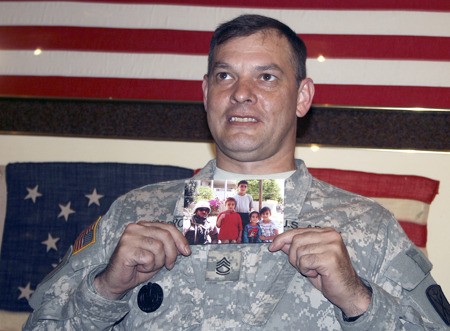
Sgt. First Class Chad Hassebroek will retire in the next few months, after serving his country for 25 years. He’s a member of VFW Post 9430 in Skyway.
As an Army careerist, he understands what’s available to fellow soldiers and others once they leave service.

“They don’t have to worry about what I am going to do, because there are programs out there to help you,” he said in an online interview with the Renton Reporter.
The extension of the Veterans and Human Services levy is critical to help maintain those services, say veterans advocates and service providers. The property tax levy is on Tuesday’s primary all-mail ballot as King County Proposition 1.
One of the key offices of the King County Veterans Program is in Renton, on Lind Avenue Southwest. It’s there that a veterans claim representative, such as Cindy Kartes, helps a veteran understand the benefits available or helps make referrals to other agencies.
“One of the common needs is understanding the complexity of the VA system and what are the benefits they need,” Kartes said. She actually works for the Veterans of Foreign Wars, which receives financial support from the levy for the services she and others provide.
Her outreach area is much of South King County, where demands for veterans services is great.
The Renton office provides a monthly orientation for veterans.
Fred Steele is program manager for the King County Veterans Program, started in the 1950s as a state-mandated program to help homeless veterans. Until 2005, when the initial veterans and human services levy was approved, it was considered an entitlement program, Steele said.
But now its focus has changed to expand services and provide greater access to veterans and their families in King County, he said. Help is available to military reservists and members of the National Guard.
The program has nine satellite offices, where once there was just one office in Seattle.
In 2010, the county program served 2,661 clients – veterans and family members; 498 of them were served through the Renton office.
Now the goal is to manage the needs of each veteran, Steele said, and provide them with an assessment, help them understand the barriers to self-sufficiency and provide services and referrals.
The program provides interim financial assistance, but such financial assistance is not the key to overcoming those barriers, said Steele.
“The key is the referral to services and getting them reconnected to the VA,” he said. Counseling is often provided by private agencies, such as Valley Cities Counseling, based in Kent, which provides services throughout South King County.
The county levy makes it possible to partner with the state veterans affairs department to provide services the state couldn’t, he said. Those programs include counseling and therapy for PTSD or Post Traumatic Stress Disorder, and one to help veterans who are jailed leave as soon as possible, with the services they need.
Two key reasons for jailing are domestic violence or an “addiction issue” that many times stems from PTSD or an traumatic brain injury, he said.
The county veterans program and other programs will continue to evolve as veterans return home from Afghanistan in increasing numbers.
“Today’s veterans are much different in terms of the way they relate to the world,” said Steele, a Vietnam veteran. “They relate through social media.”
Someday, services could become more available through social media, he said. Part of the challenge is to provide those services in a confidential way, he said.