Let’s play some Mahjong
Published 11:30 am Friday, November 21, 2025
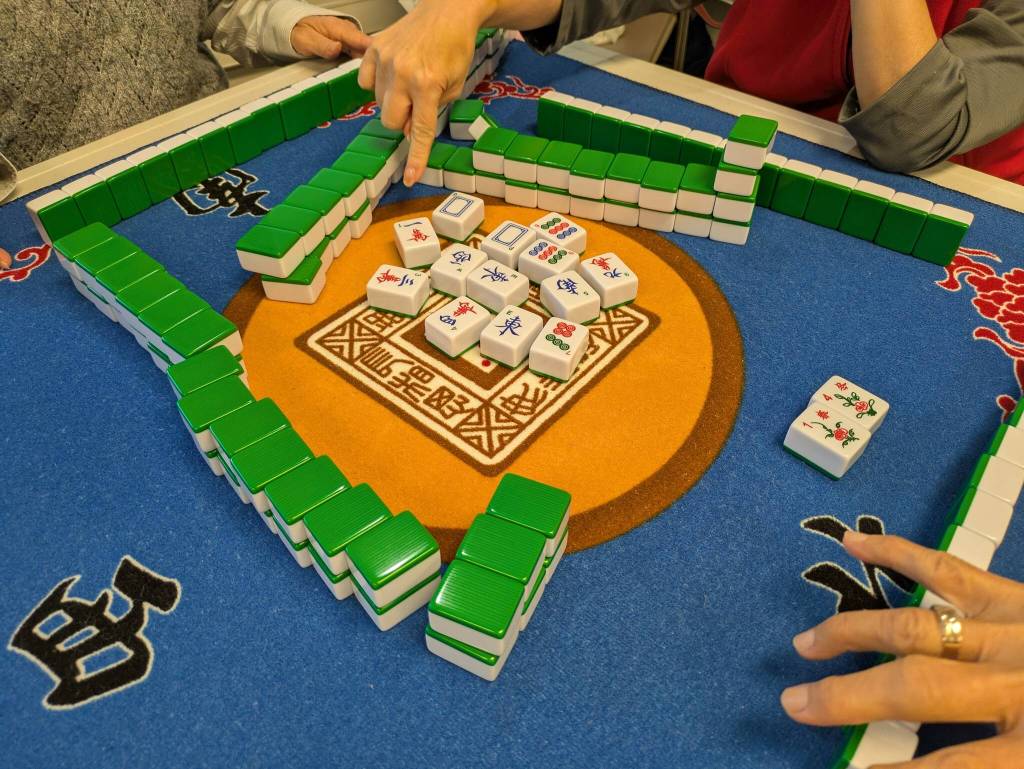

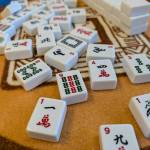
The best way to learn is just to play.
On a rainy Friday morning, I decided to check out the Don Persson Renton Senior Activity Center’s twice-weekly Mahjong games, where seniors come and play the 19th-century Chinese game of “skill, strategy and luck.”
“It’s good for seniors because it exercises your hands and your brain – but not your feet,” Niko Spencer said with a laugh. Spencer lives in Tukwila and has been coming to the Renton Senior Center to play Mahjong since 2023.
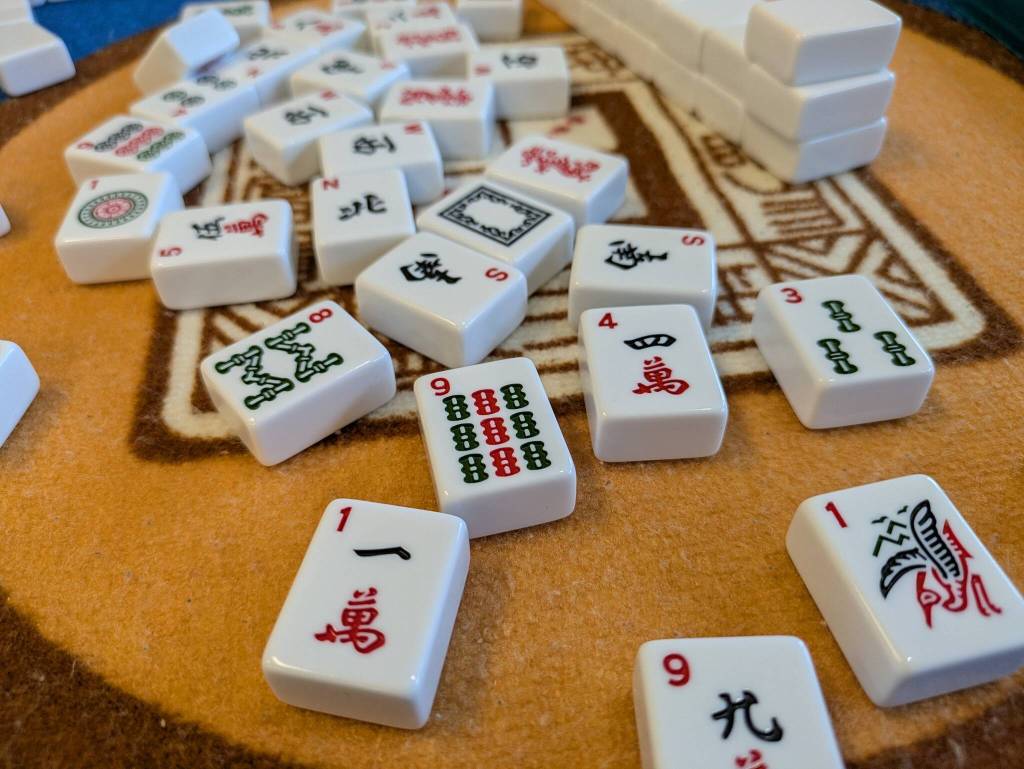
A tile-based game, Mahjong is similar to gin rummy in concept, but is made up of 144 tiles that are numbered and categorized into bamboo, number characters, dots, winds, dragons, flowers, seasons and sometimes jokers. The object of the game is “three, three, three, three and a pair,” as Spencer said.
Best played with four people, but variations of the game allow for three players, Mahjong is where players must receive and discard tiles in order to make a row of tiles of four separate sets of categories in a chain of three and then two twin tiles. The first person to do so, with no extra tiles in their row, wins.
As soon as I walked into the Hemlock Room on the second floor, Spencer took me under her wing and would not hear of it when I told her I just wanted to observe and ask questions — she insisted that that was no good and that she would teach me to play. How could I refuse?
Under her tutelage, I was able to successfully play my first few games. It was slow but I quickly found that it was a very intuitive game; the mind instantly searches for patterns, ranks, classifications and outliers and as we played with Alice F. and Dave Bartlett, the easier it became to make the right choices and get the hang of it.
I played a total of four games and came close to winning twice – it was a rush to learn a little bit at a time with each game and, when Spencer went downstairs for lunch (lunch is served on the first floor every day starting at 11:30 a.m.) she left me in the care of Sui Chan. Spencer described Chan as the ultimate Mahjong expert and she was not wrong.
As I played my last few games of the day, Chan stood over my shoulder and gave me tips to keep the flow of the game going and she said that the game is all about looking at what your opponents are doing, not just focusing on your own tiles.
“You’re aware of others and you’re aware of yourself,” said Chan. We were eventually joined by Jenny and Maury Singer of Kent, who go to different senior centers throughout the area to play Mahjong.
“We just started playing this year,” said Jenny Singer. “My grandmother played and I always wanted to play.” Maury Singer said that, while the couple have their own Mahjong set, they never had enough people to consistently play at home. “We saw people playing one day and it looked fun,” he said.
At the Renton Senior Center, Mahjong games are scheduled for Wednesdays from 3-7 p.m. and Fridays from 11 a.m. to 2 p.m. and around noon that Friday, the room began to fill with more seniors setting up games and so I decided to abdicate my seat and use the rest of my time there to talk with the various players; every single time I sat down and asked players about why they play Mahjong, they all talked about the health benefits the games have for seniors, just like Spencer said.
One 2020 study backs up what everyone was saying about the game. A group of elderly people in China with mild cognitive impairment (MCI) were placed in a study where they played Mahjong for one hour three times a week for 12 weeks, and were tested for their executive function before, half way through and then at the end of the study. According to the study, executive function is the “advanced cognitive function for completing tasks and/or overcoming difficulties involving prefrontal cortex-mediated working memory and reflection, planning, organization, and management.”
The research concluded that playing Mahjong for 12 weeks does improve the executive function of elderly people with MCI, and that, due to Mahjong’s low-cost and simplicity, “it could be widely applied to slow down or reverse the progression of cognitive decline in people with MCI, including those with traumatic brain injury.”
“It’s good for your brain power and for socializing,” said Ilana Cooper, who whipped out printouts of the game’s different variations (there’s a Milwaukee version?!) and rules for me to look over as I watched her play with some other seniors. Cooper said that she first learned how to play in 2017 and that she has been hooked ever since — and I have to say that I share her exuberance for this game of flowers, wind and dragons.