Congressman Smith secures $13M for projects in King County
Published 2:45 pm Monday, April 13, 2026
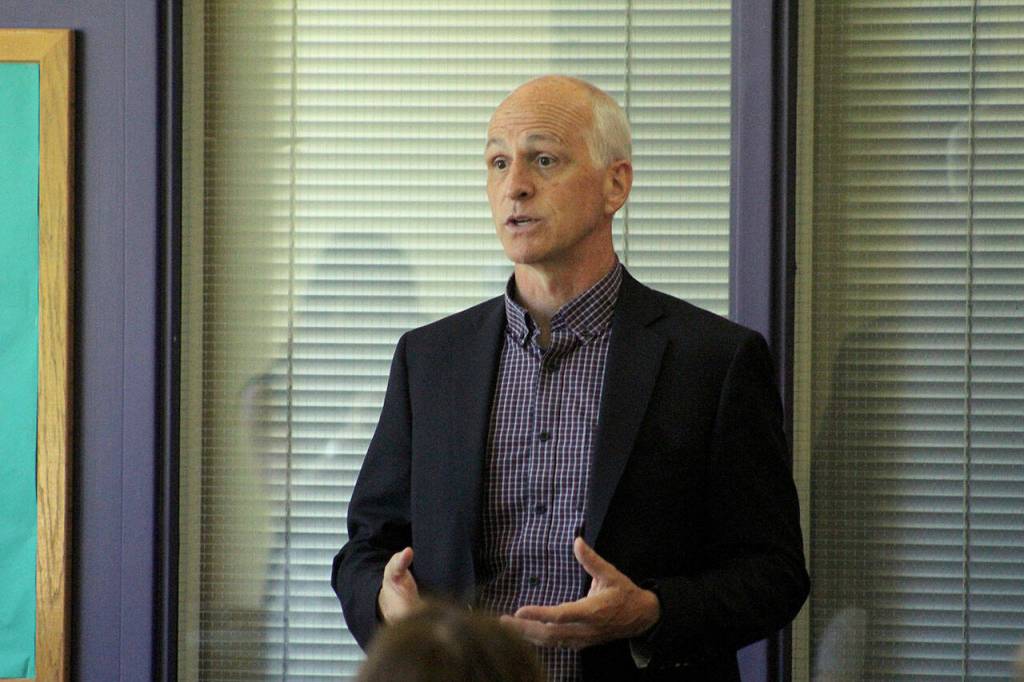
Nearly $13 million of federal funds will be coming to Washington’s 9th Congressional District to support locally-led projects in South King County.
U.S. Rep. Adam Smith (D) announced he secured $12,816,000 in community project funds from Washington, D.C., to reinvest back into local communities. It will fund community-driven projects led by local organizations in transportation, public facilities, emergency services, workforce training and community infrastructure. Smith said he advocated for these projects for the past several months.
“We have a mechanism in Congress for member-directed spending, or congressionally directed spending, whereby members can ask for specific chunks of money for projects in their district,” Smith said.
Smith said the money for these projects comes from a variety of sources, and the federal money is used as the “last mile.” He said the projects were selected on their viability.
“Any one of these groups, by the time they come to me, they have lined up money, they have a plan, and they’re going forward. We know that if we get the money, it actually will make a difference and will be spent as intended,” Smith said. “That doesn’t always work out. Sometimes projects unexpectedly flop. But for the most part, once we get to that ask, the money goes toward the project, and the project goes forward.”
The district stretches from Auburn and Federal Way in the south to parts of Seattle and Bellevue in the north, and also includes the cities of Kent, Des Moines, Renton, Newcastle and Mercer Island.
The funds will be going to 14 projects in the area.
• In Bellevue, $2 million will be invested in the Bellevue Grand Connection I-405 Crossing from Downtown to Eastrail. This will support outreach, engineering and environmental review work during the 30% to 100% design phase of the project designed to connect people walking and biking across I-405 to jobs, transit and housing.
• Renton will get $1.092 million to deploy modern sewer systems for more resilient and safer water systems.
• Green River College in Auburn secured $250,000 for the Electric Vehicle Automotive Center, a regional hub for EV maintenance technician training.
• Federal Way will receive $250,000 for the Federal Way Day Center Relocation Project, moving to a repurposed pool building at the Red Lion Hotel property. The facility will offer hygiene services, case management and other essential support.
• In SeaTac, $1.031 million was secured to invest in a STEM education program through the Congolese Integration Network to better equip immigrant communities with digital literacy skills needed in the STEM fields. Another $250,000 will be going to the construction of the Airport Station Area Pedestrian Improvements Project in SeaTac, a 1.3-mile multimodal project in the City Center Urban Village that will improve access to transit, schools and the airport by enhancing pedestrian safety, lighting and mobility infrastructure.
• Des Moines and portions of Normandy Park will receive $1.092 million for water treatment for drinking water. Des Moines also secured $850,000 to redesign and expand Midway Park.
• Highline College in Des Moines will receive $1.2 million to renovate their soccer field and sports complex to address the lack of adequate recreational facilities in the community.
• Tukwila will receive $850,000 to replace the Tukwila Community Center HVAC system. The center is used for community recreational activities and as a resource during natural disasters and extreme weather events.
• South King Fire secured $850,000 for the Firefighter PPE CO₂ Decontamination Unit to decontaminate clothing and equipment.
• Seattle’s Chinatown-International District will receive $1.039 million, helping to create a squad to de-escalate conflicts and connect individuals with housing and behavioral health resources. Seattle will also receive an additional $1.031 million for King County Jail Pilot Housing and Successful Reentry Program to integrate formerly incarcerated individuals back into the community by giving them resources to sustain a job, build the economy and live within Puget Sound. Another $1.031 million will be allocated to improve overdose response in Seattle.
“I feel like we’re working together with the community to show people that the system works,” Smith said. “I think the coolest thing about these projects is the coordination between all levels of government and all levels of community leadership. That’s how you build a stronger community.”