Renton to upgrade traffic lights to adjust for peak times
Published 7:30 am Saturday, November 29, 2025
More traffic lights in Renton will soon have vehicle detection technology to help alleviate traffic jams at busy intersections.
At its Nov. 10 meeting, the Renton City Council approved implementing adaptive signal control at seven more traffic signals in the city. This will expand the city’s Split Cycle Offset Optimization Technique system, or SCOOT, to 34 adaptive signal control intersections.
The city will be paying $123,200 to Western Systems and $133,683.60 to SWANCO for the equipment and installation to convert signals that previously worked on prescheduled time periods and do not change with traffic conditions.
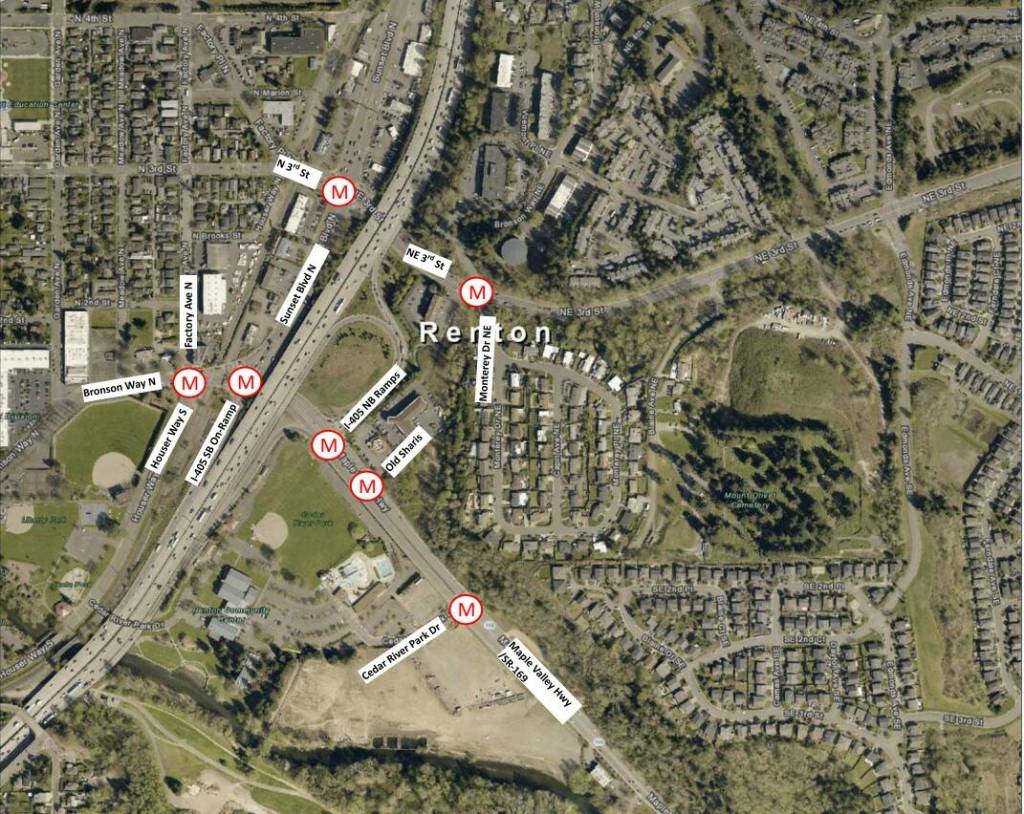
The purchase will add the new equipment to intersections on NE Third Street from Monterey Avenue NE to Sunset Boulevard, on Sunset Boulevard from NE Third Street to I-405 southbound on-ramp and Maple Valley Highway/Bronson Way, and on Bronson Way/Maple Valley Highway from Factory Avenue N./Houser Way to Cedar River Park Drive.
Renton Principal Civil Engineer Flora Lee said the detection equipment is an all-in-one stop bar and distance detection that can support adaptive signal control systems. She said the equipment can feed upstream and downstream data into the adaptive signal control system for continuously real-time traffic signal timing changes.
“This allows the system to adjust green times dynamically to help more vehicles move through intersections in a network or corridors as traffic builds up,” Lee said. “This maximizes the throughput on roadway facilities based on real time conditions/patterns/demands as a network or corridors — up to the point the road can physically handle.”
A previous traffic study from 2017 and 2018 has shown the SCOOT system is reducing travel times in Renton. The study showed the average weekday corridor travel time from Oakesdale Avenue SW to 128th Avenue SW decreased by 8% for westbound travel and by 13% for eastbound travel throughout the day.
During midday and afternoon peak times, travel times decreased by 3% to 12%. However, an increase in volume from 2.9% to 19.6% during the morning peak resulted in a travel time increase of 3% to 6% through the corridor.
The installation of the adaptive signal control systems in this corridor resulted in a throughput, or the total number of vehicles moving through the corridor over a time, increase of 6.5% in the morning, 0.8% during midday and 3.3% in the afternoon.
The Transportation Improvement Program, which has a total 2025 budget of $846,000, will sufficiently fund this project.