Renton teams with county on disaster preparedness
Published 1:30 pm Saturday, October 11, 2025
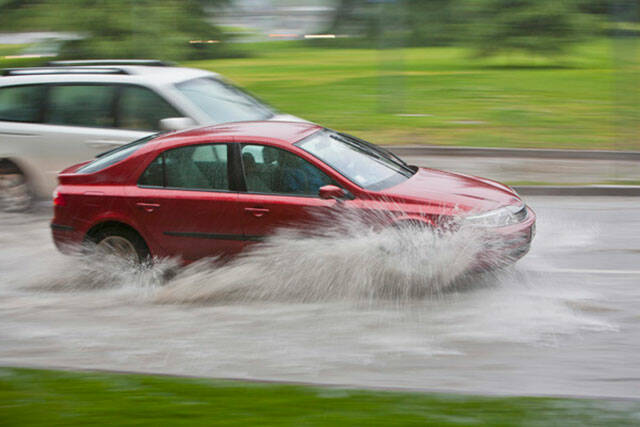
The city of Renton and King County are working to prepare the city for disasters with a hazard mitigation plan.
The Renton City Council adopted the 2025 to 2030 King County Regional Hazard Mitigation Plan and the city’s annex of the plan on Sept. 8.
Renton Emergency Management Director Deborah Needham said the purpose of the plan is to lessen the likelihood of a hazard or disaster occurring, or lessen the damage from the disaster.
“The plan is a driver for being able to mitigate against things that haven’t happened yet, but that are possible or probable,” Needham said. “The reason we do a mitigation plan is because the things we know are going to happen as a surprise, we are never going to have the budget to absorb them all at once.”
Needham said money they invest to mitigate problems will save taxpayers money long term. She said FEMA estimated that every dollar spent on mitigation saves six dollars in disaster recovery costs.
“When we do a mitigation project we are asking, ‘If we put a dollar into this, are we going to get at least a dollar out in savings on the other side?’ Because if not, why would you do it, unless it’s about safety,” Needham said. “Why would you put a million dollars into something that if it’s damaged, it’s only going to cost you $50,000 to repair?”
Needham said they also evaluate if there are potential safety issues.
“How do you put a dollar value on a human life?” Needham said. “Where there are life safety issues, we put a lot more emphasis on that and often, for most plans, it’s where a lot of mitigation focus will go.”
The King County plan has in-depth descriptions of all of the hazards significant in King County, and most of those apply to Renton. But the annex makes it more specific to Renton and has some actionable items to reduce the impact of disasters on residents and businesses.
“Our annex gives a little more personalized, ‘Rentonization’ of the hazards and how they apply to Renton,” Needham said
For example, Needham said one of those potential hazards is a dam failure, so the plan identifies possibilities that lessen flooding hazards from that potential hazard or general flooding. She said the plan lists projects that city engineers and consultants have identified to mitigate flooding in the city.
One of those projects is the Cedar River Gravel Removal Project to increase the depth of the river and combat normal sediment deposits that occur over time. She said they remove extra sediment when measurements show flood levels could impact people’s properties.
“If we just left it alone, eventually the river would just keep filling up with sediment and keep spreading out, leading to more flooding risk for our neighborhoods along the river,” Needham said.
Needham said flooding is a threat they are most aware of potentially facing, but she has not seen a flood cause a significant amount of private property damage in the last 18 years. She said flooding in 2009 caused several million dollars in infrastructure damage to the Cedar River Trail, which took nearly a decade to repair.
Needham said the flooding hazards are likely not dangerous to residents in Renton unless there was a dam failure. She said earthquakes are probably the biggest threat to people of the hazards threatening Renton. She said while the city is working on the large scale, each household should be prepared for disaster to strike.
“Most injuries in earthquakes are caused by falling, non-structural materials. That means the building doesn’t cave in on their head. The large, tall bookcase falls over on them or things fly across the room in the extreme shaking of a large earthquake,” Needham said. “You can completely mitigate that within your home.”
The Great Shakeout, an annual, worldwide earthquake drill, is on Oct. 16 this year at 10:16 a.m. local time. Needham said drills that prepare people for how to respond in the event of an earthquake is a mitigation itself.
“If we can get them underneath a sturdy piece of furniture while the shaking is happening, things that are falling are not going to land on them,” Needham said. “It protects them and then they can safely exit their home when the shaking stops.”