Grant helps Renton continue food waste separation program
Published 7:30 am Saturday, October 4, 2025
Grants will continue to fund a program that helps businesses and organizations prepare for food waste separation standards in Renton.
The city of Renton is set to receive $131,964.46 in grant revenue for the continuation of its waste reduction technical assistance program for commercial customers from 2025 to 2027 through the Washington Department of Ecology’s Local Solid Waste Financial Assistance (LSWFA) program.
The goal of the program is to educate customers on how to comply with the Washington Organics Management Law.
The law is aimed at reducing the amount of organic material in the landfills by 75 percent by 2030. One way the law is planning to accomplish that goal is by requiring businesses and organizations that produce at least 96 gallons of organic material waste per week to separate that waste for organic materials management services by Jan. 1, 2026. Fines for not separating wastes and using those services can accumulate to up to $10,000.
Renton Solid Waste Program Manager Meara Heubach said all businesses will have to follow these standards by 2030. She said the new standards will affect businesses, but also places like churches, nonprofits and schools.
The reason to separate food waste is to send less garbage to the landfill, but also because when food waste breaks down in the landfill, it produces methane.
“The release of methane into the atmosphere is contributing to climate change,” Heubach. “The organic materials, like food and yard waste, that are separated are being turned into compost and are being turned into something useful instead of a big pile of trash. It keeps those nutrients in use.”
Heubach said they started the waste reduction technical assistance program in 2024, and have been reaching out to some of the customers that are producing the most food waste. A priority of their program is communicating with locations that are staffed or owned by Spanish and Vietnamese speakers.
“We have a multilingual outreach staff who speaks Spanish, Vietnamese and other languages as well so that everyone is getting the information in the language that they need it,” Heubach said.
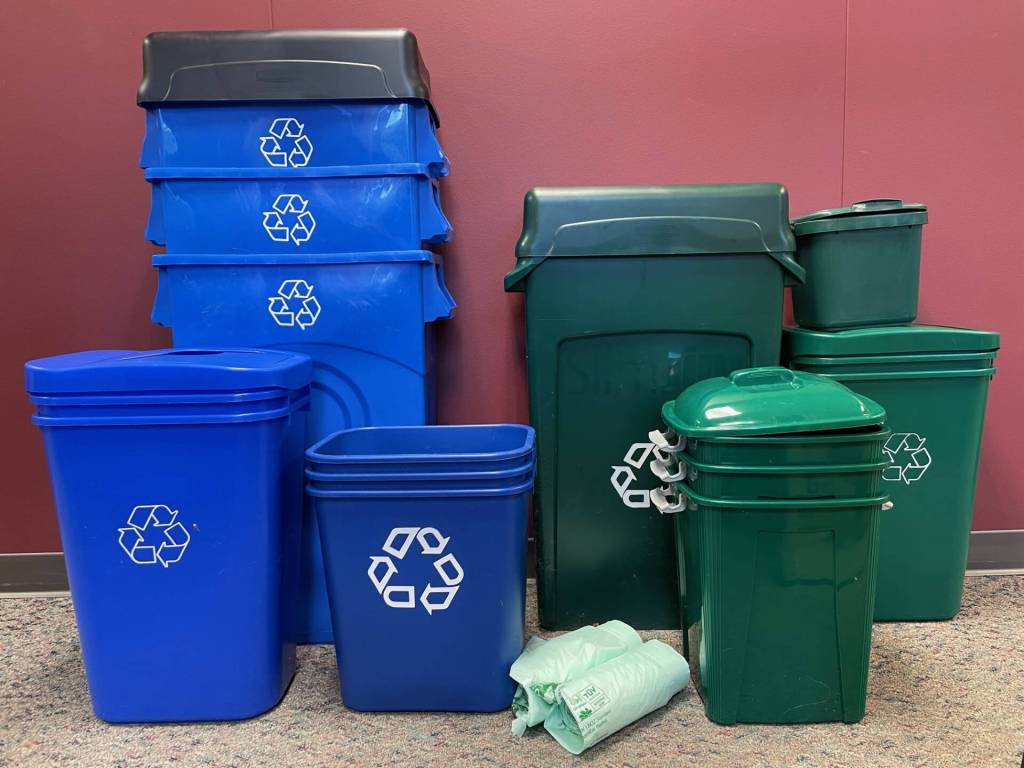
Heubach said they first identify which customers don’t have organics collection currently, and which of those businesses would be producing food waste. They then send out their outreach team, staffed by Cascadia Consulting Group, to those commercial locations to introduce the program and provide free materials such as bins, signs in different languages and a limited supply of compostable bin liners. They also provide staff training on how to separate their waste. Heubach said these services are provided at no cost to the businesses.
Heubach said commercial locations that create at least four cubic yards of food and yard waste have already had to sign up for this service, as of the beginning of this year.
“That essentially means your large restaurants and grocery stores,” Heubach said.
Heubach said they have seen a positive response from the community.
“We have heard from customers receiving outreach that this helps them reduce their garbage bills and even boosts morale because it makes employees feel good, like they are doing the right thing and helping to make a difference,” Heubach said.
Heubach also said they are currently working on another grant agreement from King County to add more funding to the program and work with the city of Kent to expand the program there.