Gene Coulon Beach reopens for swimming | July 22
Published 12:49 pm Wednesday, July 22, 2026
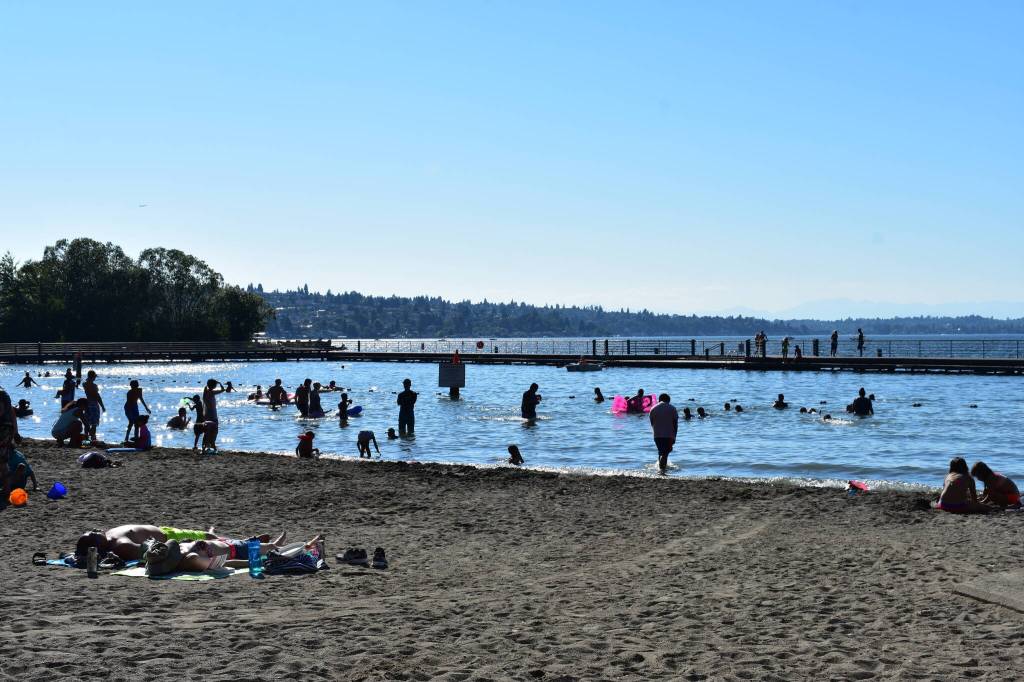
Those seeking respite from this week’s high temperatures, rejoice: Gene Coulon Memorial Beach in Renton has re-opened for swimming.
According to the King County website, the latest testing on July 20 shows that Gene Coulon — the most southern swimming beach on Lake Washington — has lower levels of bacteria than the previous week.
Data shows that all three sampled areas are below 320 colony forming units (CFU) per 100 milliliters of sample water (>320 CFU/100 mL). CFU is a count of the number of bacteria, per 100 milliliters, and anything higher than 320 CFU/100 mL is considered a high level of bacteria and thus unsafe for swimming.
Sample A shows 77 CFU/100 mL, while Samples B and C came back with 24 CFU and 200 CFU.
The water at more than two dozen lake beaches that are popular swimming spots are regularly tested for bacteria every year from mid-May to mid-September. If water tests find high CFU, it means that there are high levels of biological waste from people, pets, or wildlife in the water, which can carry germs that make people ill.
On July 13, the beach closed for the fourth time this year. Sample A showed 45 CFU/100 mL, Sample B showed 85 CFU/100 ml and Sample C showed 420 CFU/100 mL.
What the county does once a beach is closed
The county first tries to find the source of the high bacteria, which means finding the source of waste getting into the water. Additional testing may be utilized along with contacting local sewage utilities about possible sewage leaks and spills.
When the source of the high bacteria levels are determined, the county will work with beach managers to keep poop out of the water, allowing swimmers to eventually return.
According to the county website, beach managers will be advised to do the following:
• Remind people that dogs are not allowed at the swimming beach, and geese and ducks should not be fed near the beach.
• Clean up goose poop from docks to keep it out of the water at the swimming area.
• Reduce the number of geese near the beach, by using shiny mylar strips (“scare tape”) or specially trained dogs.
• Renovate docks to allow more water circulation through the beach area.
• Improve drainage in the park area near the beach, to reduce bacteria washing into the lake near the beach.
• Reduce poop getting into streams near beaches.
To learn more about King County’s swimming beach data, visit kingcounty.gov/en/dept/dnrp/nature-recreation/parks-recreation/king-county-parks/water-recreation/swimming-beach-bacteria-temperature.