Renton works to slow down drivers and improve safety
Published 2:00 pm Friday, April 24, 2026
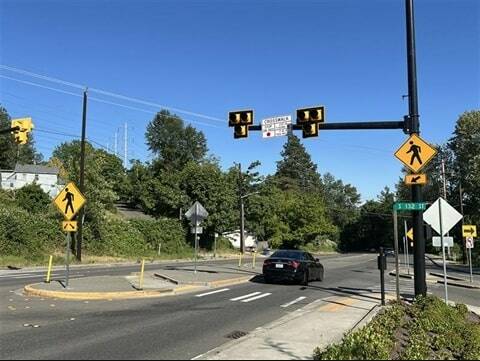
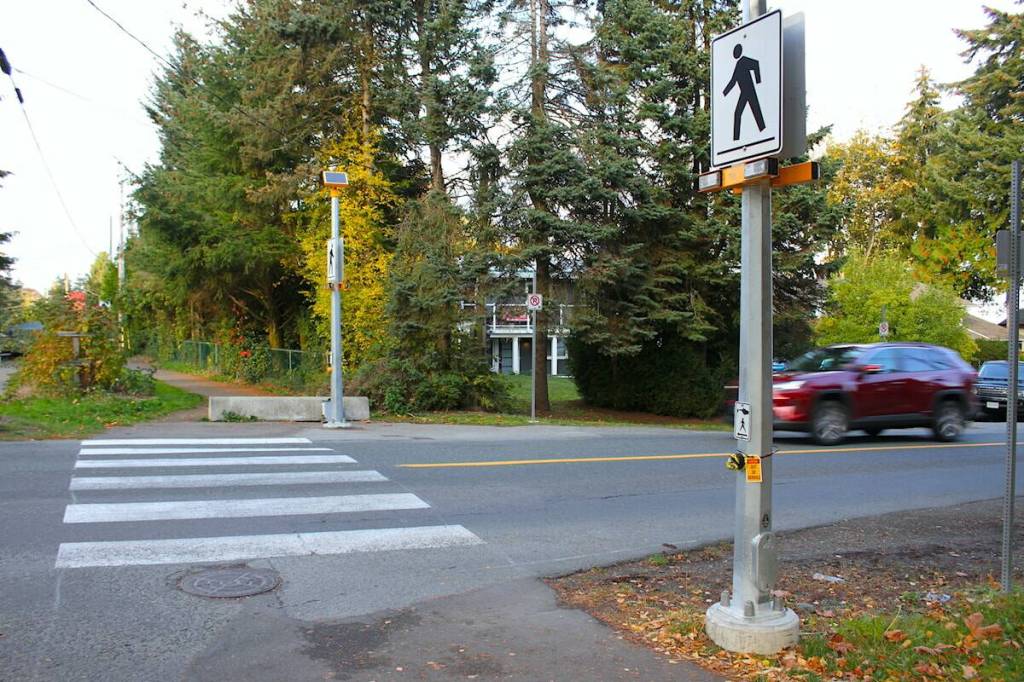
With traffic and pedestrian safety as a major concern, Renton’s traffic calming program works to reduce speeding on the city’s streets.
According to the National Highway Traffic Safety Administration, there were 12,151 speeding-related deaths in the U.S. in 2022, and speeding was a contributing factor in 29 percent of all traffic fatalities.
At the April 6 Renton Committee of the Whole meeting, Renton Traffic Engineer Blake Costa gave a presentation on the city program to increase safety by reducing vehicle speeds or volumes on the street network.
The program has two tiers of traffic calming treatments. Tier one does not physically disrupt the path of a motor vehicle, such as with signage and pavement markings. Tier two will disrupt a vehicle’s path, such as with speed cushions and roundabouts.
The procedure for traffic calming starts with a request. The city receives two to three requests a week through Renton Responds. The city then will collect speed data and implement a tier one calming treatment if necessary. If the speeding does not meet the city’s threshold, they share the data with the police department, and a radar trailer can be requested by residents.
“We check to see if the 85th percentile speed is greater than or equal to the speed limit, plus 5 mph,” Costa said. “That’s just a gauge to see if the majority of traffic is traveling higher than the speed limit at those metrics and if that’s the case, then we do move forward and install traffic calming.”
The city then waits a year to see if the treatment took effect. If speeding is still an issue, the city will then select a tier two treatment. Before implementing the treatment, Costa said they will first check with nearby residents affected by the project. The city has to have a 65 percent approval from residents to install the tier two treatment. Data is also taken after the tier two treatment is implemented.
Signs that show if a driver is exceeding the speed limit are a common tier one treatment used by the city. Costa said these signs are rotated throughout the city after three months, then reinstalled after nine to 12 months.
Speed cushions (three- to four-inch elongated bumps) have been implemented throughout the city as a tier two treatment. Ten sets of speed cushions installed along Lake Washington Boulevard have reduced the number of speeders on the street by 93 percent, according to a 2024 traffic study. SW Fifth Place and Aberdeen Avenue NE received speed cushions this year, for a total cost of $198,875.
The city has 12 locations currently on the tier two traffic calming project list. This year, SW Langston Road and NE 12th Street will receive the treatment. Lake Washington Boulevard will receive the rest of its speed cushions in 2027, after being delayed due to I-405 construction.
Speed cushions are only a solution for when the roads have a speed limit of 25 mph or less.
Roundabouts are another possible tier two treatment, but the space needed makes them harder to implement. Transportation Operations Manager Chris Barnes said traffic signals are about the same cost as roundabouts without having to possibly displace homes or businesses on the corners.
Narrowing lanes can also slow traffic, such as Rainier Avenue. This is a bigger project conducted by the Transportation Improvement Program.
Costa said changing speed limits has to be followed up with traffic calming treatments because “appropriate” speed limits are judged by the 85 percentile rule, which is the speed at which 85% of the drivers are traveling at or below. Changing the speed limit alone would not cause enough drivers to slow down to justify the speed limit change.